
Description
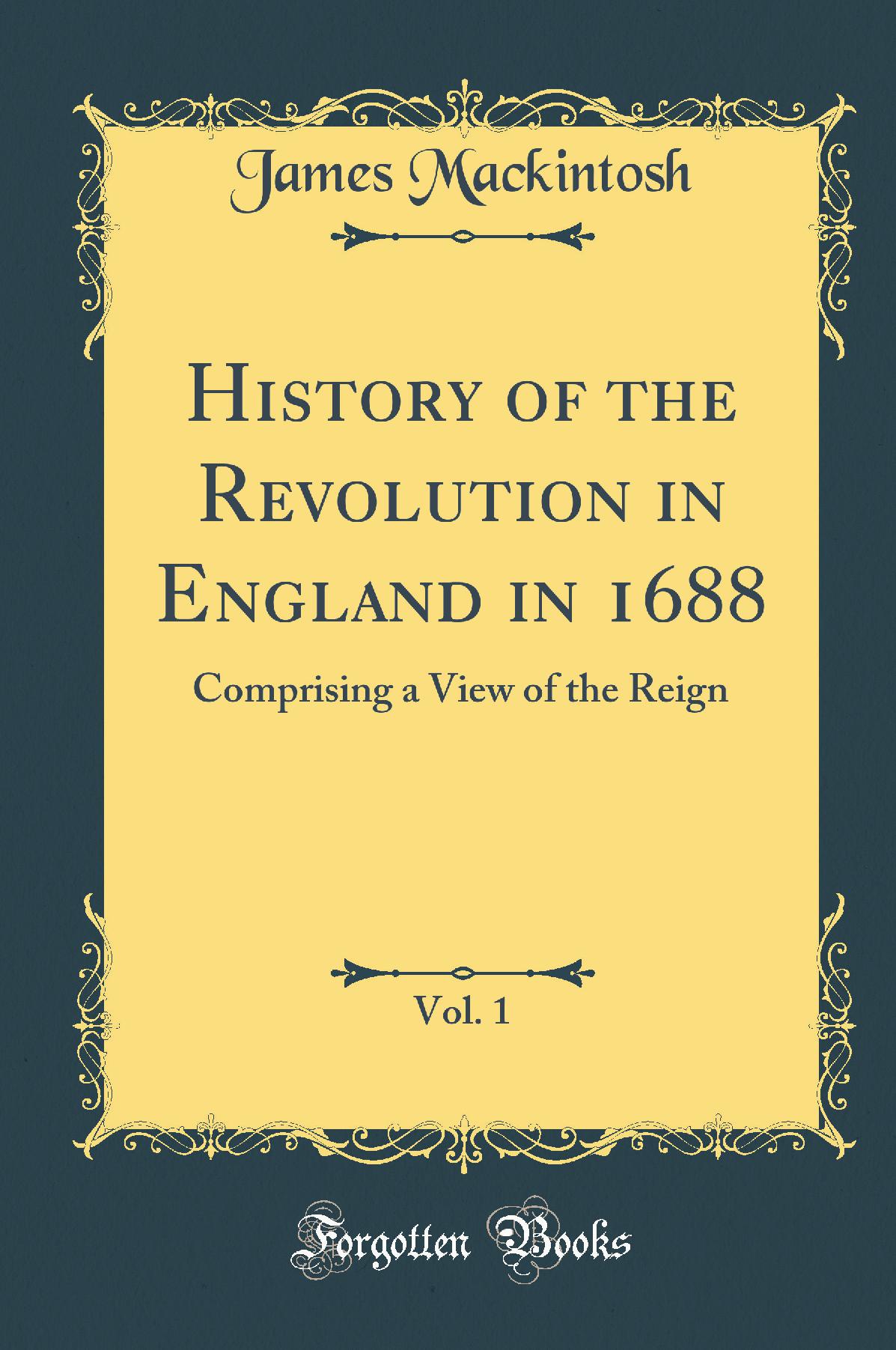
Excerpt from History of the Revolution in England in 1688, Vol. 1: Comprising a View of the Reign
Stuart, whom he married in January, 1789 so privately, that the pew-openers of Mary-lo-bonc Church were the witnesses. Mac kintosh, with this seeming romance, was captivated wholly by'' the good sense and amiable character of this excellent woman. It will be found that she exercised the happiest influence on the conduct of his life and employment of his time. But the friends of both parties Were equally incensed. The brothers of the lady were dissatisfied at her marriage with a young man who had neither fortune nor industry, and cf-whose capacity they had yet no idea. He had, indeed, on his arrival in London, published a pamphlet on the Regency question then. Pending, in support of the claims of the Prince of Wales and the views of the Whigs. But this first essay in politics failed to attract the notice either of the party or of the public. His family, to indulge their anger, or punish his impru dence, now withheld their supplies; and his situation would have been one of the most embarrassing, if his wife had not been pos sessed of some funds. This enabled and determined them to visit the Netherlands in the spring of 1789.
The Revolution now agitated France and Europe. Its principles, its passions, and its visions, were nowhere more deeply felt than in Brabant. Mackintosh continued in the Netherlands, residing chie?y at Brussels, until the end of the year. Arrived in London at the commencement of 1790, he found himself without money or means of living. But if his residence abroad exhausted his finances, it furnished him in return with a stock of information and enthusiasm, respecting foreign politics and the Revolution, which he was soon enabled to turn to account. Mr. Charles Stuart, the brother of his wife, was a contributor to the fugitive literature of the theatres and public press of London Mackintosh, by his. Advice, aspired to become a journalist, and was introduced by him to that multifarious editor, John Bell, then editor and pro prietor of a newspaper called The Oracle. The authorship of the defunct pamphlet, the advantages of having passed the pre ceding year on the Continent, and the title of Dr. Mackintosh, then borne by Sir James, were imposing recommendations in the eyes of the''proprietor of the journal, and he was soon installed its sole organ in the bpartmcnt of foreign politics. It was agreed between the parties that the amount of remuneration should be regulated by admeasurement in the printed columns of The Oracle. Sir James, with the-vigour and freshness of his youth, his opinions.
About the Publisher
Forgotten Books publishes hundreds of thousands of rare and classic books. Find more at www.forgottenbooks.com
This book is a reproduction of an important historical work. Forgotten Books uses state-of-the-art technology to digitally reconstruct the work, preserving the original format whilst repairing imperfections present in the aged copy. In rare cases, an imperfection in the original, such as a blemish or missing page, may be replicated in our edition. We do, however, repair the vast majority of imperfections successfully; any imperfections that remain are intentionally left to preserve the state of such historical works.
Stuart, whom he married in January, 1789 so privately, that the pew-openers of Mary-lo-bonc Church were the witnesses. Mac kintosh, with this seeming romance, was captivated wholly by'' the good sense and amiable character of this excellent woman. It will be found that she exercised the happiest influence on the conduct of his life and employment of his time. But the friends of both parties Were equally incensed. The brothers of the lady were dissatisfied at her marriage with a young man who had neither fortune nor industry, and cf-whose capacity they had yet no idea. He had, indeed, on his arrival in London, published a pamphlet on the Regency question then. Pending, in support of the claims of the Prince of Wales and the views of the Whigs. But this first essay in politics failed to attract the notice either of the party or of the public. His family, to indulge their anger, or punish his impru dence, now withheld their supplies; and his situation would have been one of the most embarrassing, if his wife had not been pos sessed of some funds. This enabled and determined them to visit the Netherlands in the spring of 1789.
The Revolution now agitated France and Europe. Its principles, its passions, and its visions, were nowhere more deeply felt than in Brabant. Mackintosh continued in the Netherlands, residing chie?y at Brussels, until the end of the year. Arrived in London at the commencement of 1790, he found himself without money or means of living. But if his residence abroad exhausted his finances, it furnished him in return with a stock of information and enthusiasm, respecting foreign politics and the Revolution, which he was soon enabled to turn to account. Mr. Charles Stuart, the brother of his wife, was a contributor to the fugitive literature of the theatres and public press of London Mackintosh, by his. Advice, aspired to become a journalist, and was introduced by him to that multifarious editor, John Bell, then editor and pro prietor of a newspaper called The Oracle. The authorship of the defunct pamphlet, the advantages of having passed the pre ceding year on the Continent, and the title of Dr. Mackintosh, then borne by Sir James, were imposing recommendations in the eyes of the''proprietor of the journal, and he was soon installed its sole organ in the bpartmcnt of foreign politics. It was agreed between the parties that the amount of remuneration should be regulated by admeasurement in the printed columns of The Oracle. Sir James, with the-vigour and freshness of his youth, his opinions.
About the Publisher
Forgotten Books publishes hundreds of thousands of rare and classic books. Find more at www.forgottenbooks.com
This book is a reproduction of an important historical work. Forgotten Books uses state-of-the-art technology to digitally reconstruct the work, preserving the original format whilst repairing imperfections present in the aged copy. In rare cases, an imperfection in the original, such as a blemish or missing page, may be replicated in our edition. We do, however, repair the vast majority of imperfections successfully; any imperfections that remain are intentionally left to preserve the state of such historical works.
Details
Publisher - Forgotten Books
Language - English
Hardback
Contributors
Author
James Mackintosh
Published Date -
ISBN - 9780428991258
Dimensions - 22.9 x 15.2 x 2.1 cm
Page Count - 385
Paperback
Contributors
Author
James Mackintosh
Published Date -
ISBN - 9781330686423
Dimensions - 22.9 x 15.2 x 2.1 cm
Page Count - 387
Payment & Security
Your payment information is processed securely. We do not store credit card details nor have access to your credit card information.