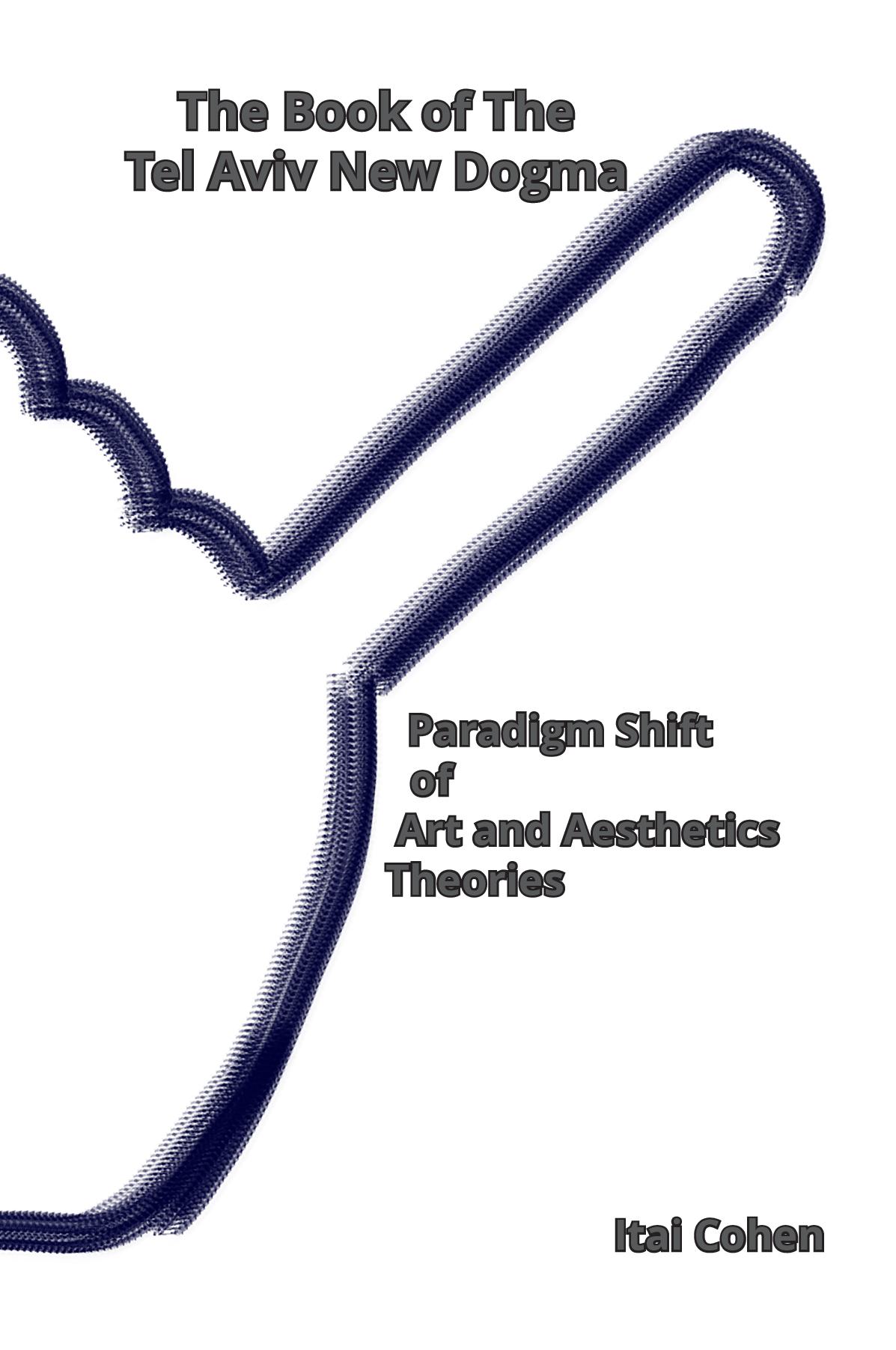
The Book of The Tel Aviv New Dogma* presents a groundbreaking paradigm shift that redefines the essence of Art by positioning the Viewer - not the Creator - as the true Artist. This radical inversion challenges both classical and contemporary paradigms, including advanced theories that emphasise the Viewer’s or Reader’s interpretive importance but still operate within a Creator-centric hierarchy. In contrast,
The Tel Aviv New Dogma fully breaks from this model by making interpretation itself the locus of artistic creation.
The book explores the profound implications of this Viewer-Artist shift across Art Theory and Aesthetics - including critical questions of authorship and legal ownership, especially relevant in the age of artificial intelligence and digital technology. By asserting that Art is an interpretive process occurring within the Viewer’s mind, it offers a coherent, unifying framework that applies to all forms of Art - regardless of medium, style, genre, period, culture, or technology.
Key themes include the concepts of Art, Truth, and Beauty in Art; the role of Art in processing trauma and engaging with historical narratives; and the relationship between Art, Science, and Public-Language. Through essays and case studies, the book offers a new lens for retrospectively understanding and appreciating both traditional and new Art in the digital era.
Ultimately, The Book of The Tel Aviv New Dogma invites a fundamental reevaluation of Art’s purpose, roles, and relations - to Science, Public-Language, and the human condition - through this transformative paradigm shift.
About The Tel Aviv New Dogma
The Tel Aviv New Dogma is a revolutionary theory of Art and Aesthetics that realises Kant’s Copernican Revolution by redefining Art as the interpretive process within the Viewer’s mind – thus positioning the Viewer as the true Artist. It distinctly separates the Creator – who may be anyone, including AI – from the Artist, the interpreter. While artefacts remain essential as definitive frames within the Public-Language, the Dogma prioritises the creation of interpretation over physical production, offering a unified theory of Art that spans all media, genres, periods, cultures, and technologies.
Target Readership
The book is highly relevant to artists, curators, art collectors, and professionals in museums and galleries — including staff, management, executives, board members, as well as academics in the fields of Art, Art Theory, Aesthetics, Art Ethics, Law, and Art Economy, particularly those open to paradigm shifts. More broadly, the book appeals to anyone with a deep interest in Art. Currently, however, the Dogma resonates especially with free professionals, particularly within Israel’s high-tech and venture capital sectors, who are receptive to a much-needed, profound paradigm shift of Art and related fields, including AI, Technology, Economy, Law, authorship, and ownership.
The Second Edition
Several improvements have been introduced in the second edition. The most significant is the addition of an Epilogue. While the book requires no prior knowledge of Art or Philosophy, the Epilogue is addressed to the expert reader seeking immediate orientation within the existing theoretical landscape. It locates The Tel Aviv New Dogma in relation to the taxonomy of Art and Aesthetics theories and highlights its distinctive contribution. The Image Index has also been expanded, two images have been added, and a number of layout, stylistic, and editorial improvements have been made.
* Any factual content presented in the book, or in the description above, should be regarded as the author's opinion.